Benko Gambit

The Benko Gambit begins after the moves 1. d4 Nf6 2. c4 c5 3. d5 b5. It is a positional gambit against 1. d4, and is a favourite of players who want lasting queenside counterplay for the price of a single pawn.

  • For black
  • Positional
  • Practical

Written by:

Eirik Aarnes

The Essentials

Early moves:
1. d4 Nf6 2. c4 c5 3. d5 b5
Colour:
Played by Black
Style:
Positional, practical
Difficulty to learn:
Moderate
Named after:
Pal Benko, the Hungarian-American grandmaster who popularised it from the late 1960s.
Trivia:
The opening is also known as the Volga Gambit, after a 1946 article written in Kuibyshev, a city on the Volga.
Variations:
Fully Accepted. Yugoslav. Pawn Return. Modern. Dlugy. Zaitsev. Declined.
Good for:

Best suited for rating

800-2000

30015002800

Known for this opening

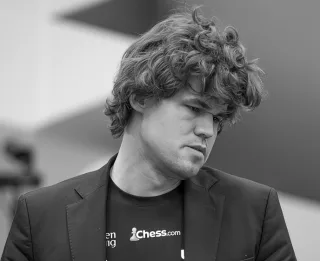
Magnus Carlsen

Magnus Carlsen

Pal Benko

Pal Benko

Garry Kasparov

Garry Kasparov

Rameshbabu Praggnanandhaa

Rameshbabu Praggnanandhaa

Why play the Benko Gambit?

Because a small sacrifice buys lasting counterplay.

After 1. d4 Nf6 2. c4 c5 3. d5 b5 4. cxb5 a6 5. bxa6 Bxa6, Black is a pawn down with the a- and b-files half-open toward White's queenside.

Black plays for slow queenside pressure. Rooks on a8 and b8, the queen on a5 or b6, and the bishop on g7 bear down on White's a- and b-pawns, so Black spends many moves material down.

White can also avoid the main fight. 4. b3 declines the gambit, 5. b6 hands the pawn back, and 5. e3 keeps it with quiet development.

Engines consider White better in the main line, and White's extra a-pawn is passed, so Black must watch it into the endgame. At club level, Black still holds its own.

In return, Black's pieces have clear squares from the start, and the queenside pressure often lasts into the endgame.

Try the Benko Gambit yourself!

Why the Benko Gambit is good with the:

Extra pawn - White stays material up, and the passed a-pawn becomes a long-term trump if Black's pressure fades.

Objective edge - Engines prefer White in the main lines of the accepted gambit.

Escape hatch - With 4. b3 or 5. b6, White can decline the gambit or hand the pawn back at once.

Suited for - Careful players who defend accurately and know how to make an extra pawn count.

Preparing chessboard...

Strategy

Typical plans, pawn breaks, and key squares.

Preparing diagram...

Queenside activity

Black develops with ...d6, ...Nbd7, and ...Bg7, and the bishops aim at f1 and b2, with the a2- and b2-pawns as targets.

Preparing diagram...

White's pawn breaks

White aims for e4-e5, supported by f2-f4, to strike in the centre while Black's pieces work on the queenside.

Preparing diagram...

Black's pawn breaks

...b5 and ...a6 are Black's breaks, and once the pawns are exchanged, the a- and b-files lead straight to a2 and b2.

Preparing diagram...

Key squares

a6, b5, and c4 are where the gambit pawns meet, b4 is a rook's entry square, and a2 and b2 are targets.

Traps and tactics

Two traps every Benko Gambit player should know.

Preparing trap board...

Themes

Blunting the attack

Queen trades often take the sting out of White's kingside chances, while Black's queenside pressure outlasts them.

Piece play

After ...b5, Black relies on active pieces rather than pawn breaks, so passive moves hand White time to consolidate.

A pawn for pressure

If Black's queenside pressure holds, White stays tied down, and if it fades, White is simply a pawn up.

Race to consolidate

White needs quiet moves to finish development and cover the queenside, and the gambit works while Black keeps that job unfinished.

History

From the Volga Gambit to Pal Benko and modern queenside counterplay.

  1. 1936

    Early sightings

    Karel Opočenský tries the idea at Poděbrady, and Einar Thorvaldsson against Paul Vaitonis at the Munich Olympiad shows today's move order.

  2. 1946

    Volga Gambit

    An article written in Kuibyshev, on the Volga, gives the gambit the name still used across much of Eastern Europe.

  3. 1960s

    Benko steps in

    Pal Benko, a Hungarian-American grandmaster, takes up the gambit in the late 1960s and adds many new ideas.

  4. 1974

    The book

    Benko publishes The Benko Gambit and separates the Volga, 3... b5, from the Benko, 3... b5 4. cxb5 a6. Today both names mean the same opening.

  5. 2020s

    Still kicking

    Engines prefer White in the main lines, yet the gambit remains a practical weapon at club level and reaches top events, as in So against Praggnanandhaa at Superbet Romania 2025.

Model Games

Games that show what the Benko pressure can do.

Preparing game board...

FAQ

The Benko Gambit begins after 1. d4 Nf6 2. c4 c5 3. d5 b5. Black gives up a pawn to open the a- and b-files and build lasting pressure on White's queenside.

Yes, especially for patient players. Black's pieces have natural squares and clear targets, but playing a pawn down takes nerve when the pressure needs time to work.

It is playable, though engines prefer White in the main lines. The queenside pressure gives Black real practical chances, and many of the world's strongest players have used it.

Black trades a pawn for queenside activity. The rooks use the half-open a- and b-files, the g7-bishop joins from the long diagonal, and the pressure often lasts into the endgame.

It arises after 4. cxb5 a6 5. bxa6, when White takes both pawns. Black recaptures on a6 with the bishop, at once or after ...g6, and turns the pieces toward the queenside.

Both begin 1. d4 Nf6 2. c4 c5 3. d5. In the Benko, Black plays 3... b5 and gives up a pawn to open the queenside, while the Benoni keeps the material and fights in the centre.

There is no single best line. White can keep the pawn with 5. bxa6 or 5. e3, hand it back with 5. b6, or decline the gambit with 4. Nf3 or 4. b3.

Benko, Anand, Kasparov, Topalov, Tal, Carlsen, Ivanchuk, Adams, Shirov, and Gelfand have all used it.

Choose the Benoni if you want sharp central play with all your material. Choose the Benko if you want long-term queenside pressure in return for a pawn.

Benko Gambit summarized

Colour:
Played by Black
Style:
Positional, practical
Difficulty to learn:
Moderate
Variations:
Fully Accepted. Yugoslav. Pawn Return. Modern. Dlugy. Zaitsev. Declined.
Good for:
BlitzRapidClassical

Ready to try the Benko Gambit?

Practice the main lines against an AI tuned to your level. Learn what the pawn buys, where Black's pieces belong, and which natural moves lose on the spot.

Looking for a different opening?